Ask how does roller burnishing work and most answers stop at “it makes the surface smoother.” That is true and it explains nothing. The interesting part is that burnishing removes no material at all, and that it happens on the same pass as an operation that removes a great deal of it.
The 17 second figure in the title is Sierra’s published cycle under a specific set of conditions: an 80mm ID tube, 1 meter in length, with 2mm of stock removed, in one forward pass. Those conditions travel with the number throughout this article, because a cycle time without them describes nothing.
Sierra Machinery & Engineering builds Skiving and Roller Burnishing machines and tooling in Sparks, Nevada, and runs a full precision shop covering CNC machining, tooling and molds, and welding and fabrication. This article walks the cycle from the tube arriving at the machine to the finished bore leaving it.
What the Tube Looks Like Going In
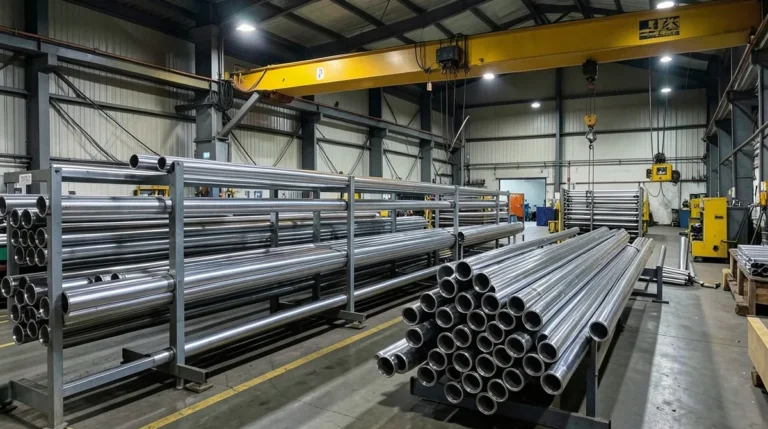
Cylinder tube arrives from the mill in one of three conditions: drawn over mandrel, welded, or seamless. In every case the inside diameter is unfinished.
The bore carries mill scale, tool witness marks, and in welded tube the remains of the weld bead. The diameter varies along the length. The bore is out of round to some degree, and over a long tube it is rarely straight.
None of that is a defect. It is what tube is, and the finishing operation exists because of it. What matters for the machine is that the incoming condition sets how much stock has to come out, which in turn sets the feed rate the tool can sustain.
Stage One: Skiving Removes the Material
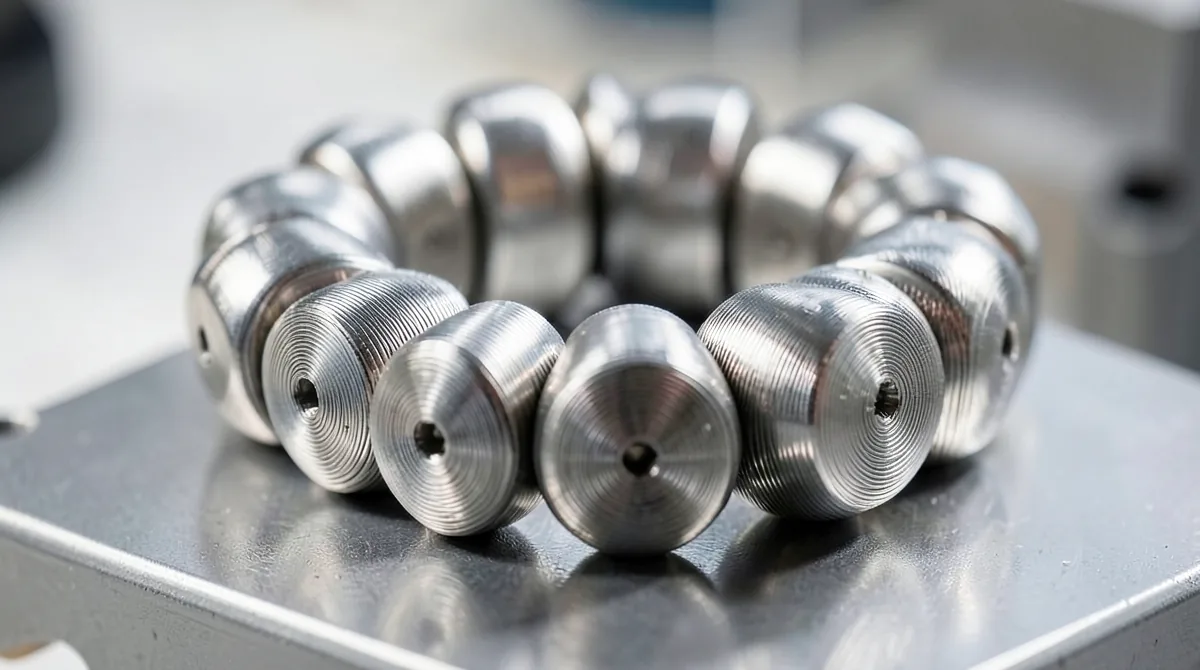
A skiving head is a cutting tool carried on a boring bar that enters the tube and travels its length. Adjustable blades on the head cut the inside surface away at a set diameter.
Two things distinguish this from ordinary boring. The head is supported inside the tube by pads or rollers that ride the bore, so the tool follows the tube rather than a fixed machine axis. That support is what makes long tubes possible at all. The head also cuts a continuous chip around the full circumference in one revolution of relative motion.
What comes out of skiving is a bore at controlled diameter, cleaned of scale and weld bead, rounder than it went in. The surface at this point is a cut surface, carrying the tool marks any cutting operation leaves.
How Does Roller Burnishing Work Without Removing Material?
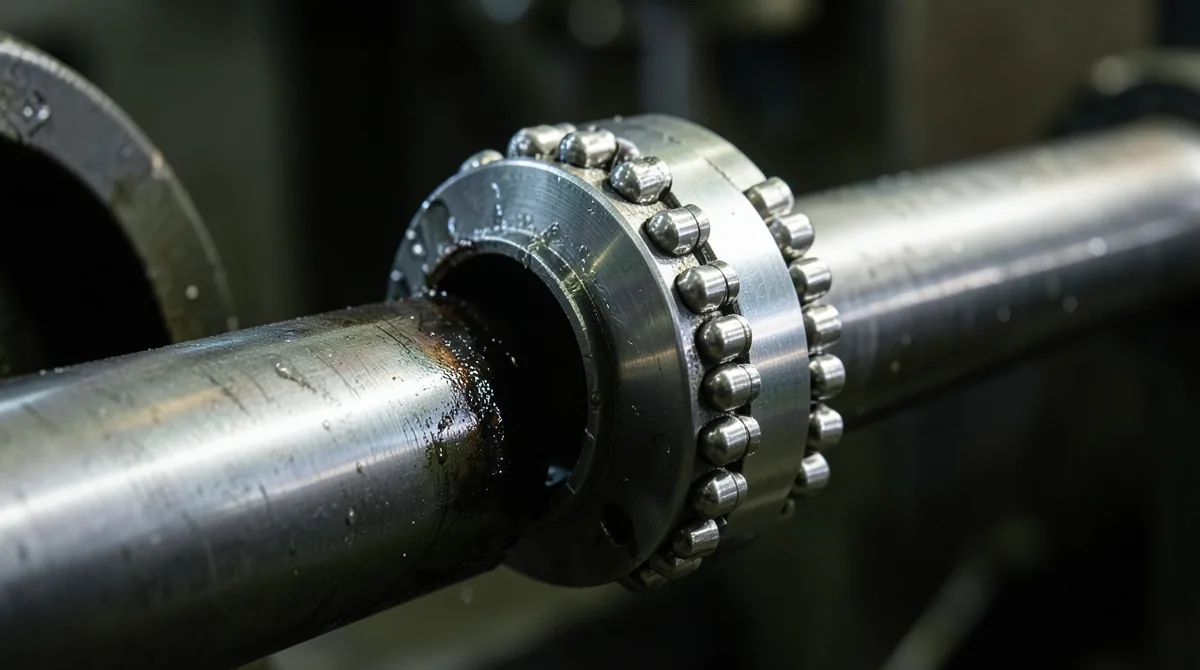
Directly behind the skiving head, on the same bar, sits the burnishing head. Hardened rollers are set to a diameter slightly larger than the skived bore and pressed against the surface.
Nothing is cut. The rollers apply enough contact pressure to exceed the yield strength of the surface material, and the peaks left by the skiving tool deform plastically into the valleys between them. The profile flattens.
Two consequences follow from working the surface cold rather than cutting it.
The surface layer work-hardens. Plastic deformation increases hardness in the worked layer, which is a different condition than the same profile arrived at by abrasion.
The material stays on the part. Because nothing is removed, the bore grows slightly as the peaks are pushed down, and that growth is part of how the final diameter is set.
Why One Pass Is Possible
The two heads are on one bar, separated by a short distance, moving together.
By the time the burnishing rollers reach any given point on the bore, the skiving blades passed that point moments earlier. There is no second setup, no reload, no re-registration of the part. The bore is cut and finished in the same continuous motion, and the tube is handled once.
That is the whole architecture of the process, and it is the reason cycle times sit where they do. It also explains why incoming tube quality matters so much. A single pass has one opportunity to bring the bore to specification.
Where the Seconds Go
Sierra publishes a cycle of one forward pass at 17 seconds on an 80mm ID tube one meter in length with 2mm of stock removal, at a feed rate up to 4 m/min and a retract speed of 9 m/min.
Take those published figures at face value and the arithmetic is visible. One meter at 4 m/min is roughly 15 seconds of forward travel. The return at 9 m/min covers the same meter in well under a second. The remainder is load, unload, and the tool entering and clearing the tube.
The forward pass is the cycle. Everything else is overhead, which is why retract speed matters more than it looks: a slow return adds dead time to every part without doing any work.
Feed rate is not a constant. It is what the tool can sustain given the material, the stock being removed, and the bore diameter, so the published figure is a ceiling rather than a promise for every job. The specifications behind these numbers are worth reading as a set rather than one at a time.
What the Support Pads Do
One detail separates this from boring a hole in a block, and it is easy to miss.
The bar carrying both heads is supported inside the tube itself, on pads or rollers riding the bore behind the cutting edge. The tool is located by the tube rather than by a fixed machine axis running the length of the part.
On a one meter tube the difference is modest. On an eleven meter tube it is the difference between a workable process and an impossible one, because no boring bar that long holds position on its own against cutting forces. Self-piloting on the bore is what lets the same architecture scale across the length range.
It also means the finished bore partly follows the tube it came from. Skiving and burnishing improves straightness relative to the incoming stock, and it does not turn a badly bent tube into a straight one. Incoming tube straightness stays a purchasing specification rather than something the machine absorbs.
How the Result Gets Measured
A finished bore is only as good as the measurement that confirms it, and surface measurement is its own discipline.
The National Institute of Standards and Technology’s Surface and Interface Metrology Group realizes and disseminates the SI unit of length for measurements of roughness, waviness, and form, and leads documentary standards work with bodies including ASME, ASTM, and ISO. Roughness, waviness, and form are three different properties of the same surface, and a bore can be excellent in one and poor in another.
For a cylinder bore that distinction is practical. Roughness governs how the seal wears against the surface. Form and straightness govern whether the seal is loaded evenly across the stroke. A single averaged roughness number answers the first question and says nothing about the second.
What Changes With Material and Bore Size
The process is the same across the range. The numbers are not.
Harder material lowers the feed rate the blades can sustain and raises the pressure the rollers need. Thin-wall tube limits burnishing force, because the tube can deflect under the rollers. Larger bores carry more tool mass. Heavier stock removal slows the forward pass.
This is why a cycle time quoted without its bore size, length, material, and stock removal tells you almost nothing, and why the comparison against honing and boring has to be made on matched conditions to mean anything.
Frequently Asked Questions About How Roller Burnishing Works
01How does roller burnishing work?
Hardened rollers press against a machined surface with enough force to plastically deform it. The peaks left by the cutting tool are pushed down into the valleys between them, flattening the profile. No material is removed. The worked layer is left harder than it was before.
02Does roller burnishing remove material?
No. Burnishing is a cold-working operation that moves material rather than cutting it away. The bore diameter grows slightly as surface peaks are flattened, which is accounted for in setting the final size. Skiving, the operation immediately before it, does the material removal.
03Why are skiving and burnishing done together?
Both heads sit on one boring bar and travel the tube together. The burnishing rollers reach each point moments after the skiving blades cut it, so the bore is cut and finished in one continuous motion. The tube is loaded once rather than handled between separate operations.
04What makes the 17 second cycle possible?
One forward pass at feed rate does the work, and a fast retract returns the tool. Sierra publishes 17 seconds on an 80mm ID tube one meter long with 2mm stock removal, at feed up to 4 m/min and retract at 9 m/min. Different bore sizes, lengths, and materials give different cycle times.
05Does burnishing harden the bore surface?
Plastic deformation work-hardens the layer it acts on, so a burnished surface is harder at the surface than the same material cut and left alone. This is a property of cold working rather than a heat treatment, and it affects only the worked layer.
Sierra Machinery & Engineering: Machines and Parts from Sparks, Nevada
Sierra Machinery & Engineering has built skiving and roller burnishing machines in Sparks, Nevada for 47 years as of 2026. A 26-person team runs a 22,000 square foot shop, with every part verified in our CMM Lab before it ships.
What We Build:
- Skiving & Roller Burnishing Machines: One forward pass, 17 seconds, on an 80mm ID tube at 1 meter with 2mm stock removal. CE certified.
- Sierra Machinery Tooling: Over 200 sizes from 35mm to 508mm, designed and produced in house
Have a bore finishing problem? Request a quote and tell us the tube size, length, and material.
Works Cited
- National Institute of Standards and Technology. “Surface and Interface Metrology Group.” U.S. Department of Commerce, 28 Aug. 2026, www.nist.gov/pml/sensor-science/surface-and-interface-metrology.