Skiving machine specifications are short lists of numbers that carry more meaning than they appear to. Read individually they are trivia. Read as a set they describe what the machine will do on your parts, and which jobs it will refuse.
Sierra Machinery & Engineering builds Skiving and Roller Burnishing machines and tooling in Sparks, Nevada, and runs a full precision shop covering CNC machining, tooling and molds, and welding and fabrication. This article takes the common specifications one at a time and explains what each one constrains.
Feed Rate
Feed rate is how fast the tool advances through the bore while cutting. Sierra publishes feed rate up to 4 m/min.
Read the phrase “up to” seriously. Feed rate is not a setting the machine holds whatever the conditions. It is the rate the tooling can sustain given the material, how much stock is coming out, and the bore diameter. Harder material lowers it. Heavier removal lowers it.
A published maximum tells you the ceiling of the machine and the tooling together. It does not tell you what your part will run at, and any supplier who says so without asking about your material and stock removal is not answering the question.
Feed rate is also the specification that dominates cycle time, because the forward pass is where the work happens.
Retract Speed
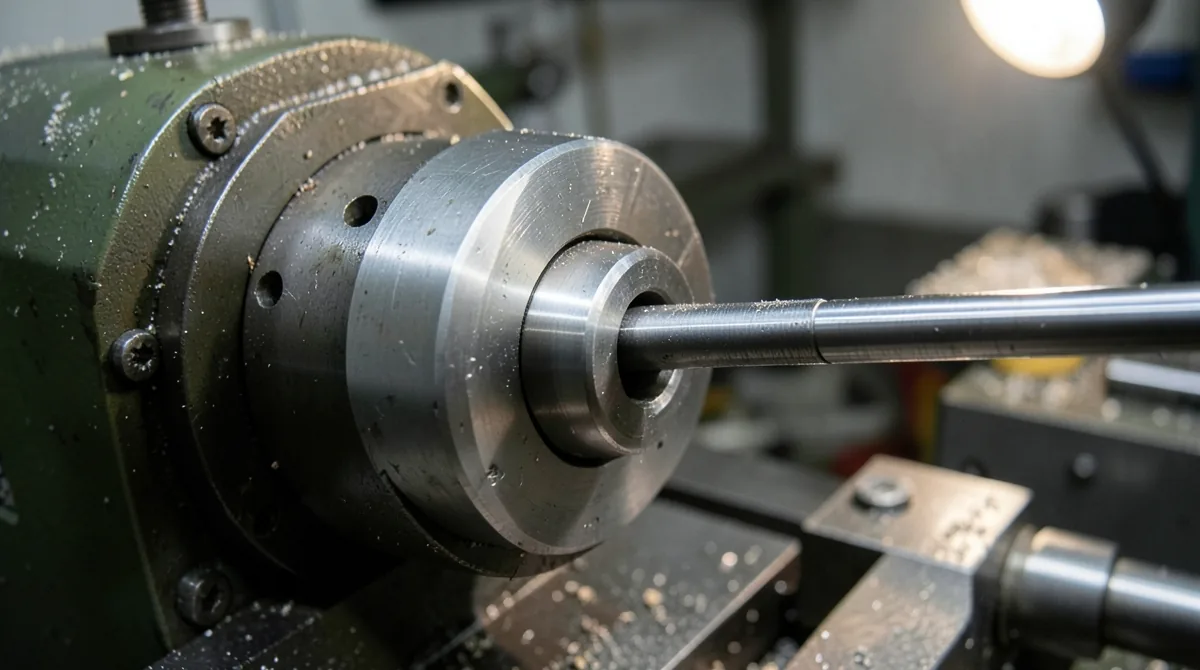
Retract speed is how fast the tool returns after the pass. Sierra publishes 9 m/min.
This number looks unimportant and is not. The return stroke produces nothing, so every second of it is dead time added to each cycle. On a short tube the difference between a fast and a slow retract is small. On an 11 meter tube, or on a part that takes several passes, it accumulates into real production hours.
Compare feed rate and retract speed together. A machine with a strong feed rate and a slow return has a worse cycle than the feed rate alone suggests.
Machine Length, 1M to 11M
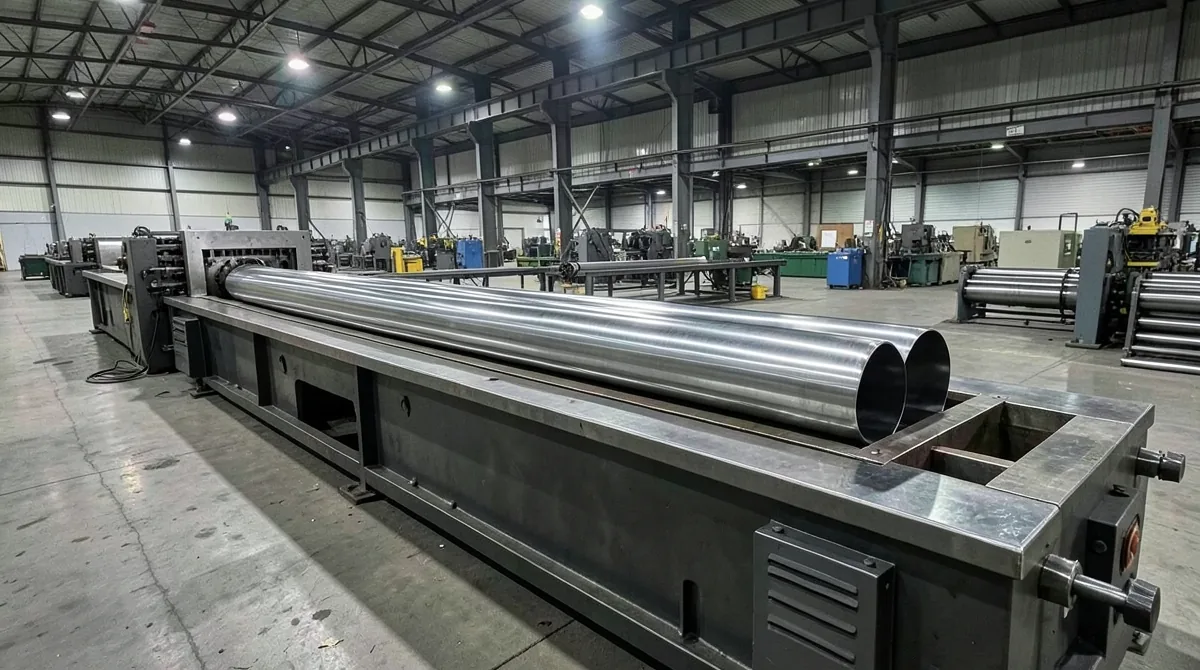
Working length is the hard constraint. Sierra builds machines from 1M to 11M, and that range covers most hydraulic cylinder tube work.
Three points are worth making about length.
It cannot be added later. Bore range can be extended with tooling. Length cannot. A machine bought short stays short.
Floor space is part of the specification. A machine handling long tube needs clear run-out at both ends for loading and unloading. The footprint on the drawing is smaller than the space the machine actually needs.
Buy against a forecast, not against today. These machines have long service lives, so the relevant question is the longest tube you expect to run over the next fifteen years rather than the longest one on the floor this week.
There is a lower bound as well, and it is easy to overlook. Sierra publishes a minimum part length capability of 150mm across the range, so short parts are not excluded by a machine sized for long tube. Confirm the minimum alongside the maximum if your product mix spans both.
Bore Range and Tooling Sizes
Bore capability comes from tooling rather than the machine frame. Sierra’s tooling covers over 200 sizes from 35mm to 508mm, designed and produced in house.
The number of sizes matters as much as the range. A supplier quoting a wide range with coarse steps between sizes may not have tooling for the specific bores you run, and the gap between “we cover that range” and “we have that size” is where delivery problems start.
Ask for the actual size list against your bore schedule rather than accepting the range endpoints.
Material Removal Per Pass
Removal capability is the specification that decides how rough your incoming tube can be. Sierra’s tooling removes from 0.016 inches to 0.60 inches in a single pass.
A wide removal range buys tolerance for mill variation. If incoming tube runs inconsistent, a machine that can take heavy stock in one pass absorbs that variation without a pre-machining operation. If your tube supply is tight and consistent, the top of that range matters less.
The bottom of the range matters too. Light removal has its own difficulties, because a cutting tool needs a minimum depth to cut rather than rub.
Cycle Time Is Derived, Not Primary
Cycle time is the specification buyers ask for first and the only one on the list that is an output rather than an input.
Sierra publishes one forward pass at 17 seconds on an 80mm ID tube one meter in length with 2mm of stock removal. Notice how much of that sentence is conditions. Pass count, bore diameter, length, and stock removal all appear, and material sits behind them.
Change any condition and the number changes. A cycle time quoted without its conditions is not a specification, and the mechanics behind the figure show why each condition matters.
The Specification Nobody Prints: Measurement
A machine specification describes what the machine does. It says nothing about how you will know it did it.
The National Institute of Standards and Technology’s Dimensional Metrology Group realizes and disseminates the SI unit of length and leads documentary standards work with bodies including ASME, ASTM, and ISO, which is the infrastructure that makes one shop’s measurement comparable to another’s.
That matters at acceptance. If the machine builder measures the bore one way and your receiving inspection measures it another, a conforming part can fail and a failing part can pass. Agree on the parameter, the instrument, and the method before the machine ships rather than after the first argument.
Tube Support and Handling Capacity
Two specifications sit outside the cutting numbers and decide whether the machine works in your plant.
How the tube is held and supported. A long tube needs support along its length while it is being worked, and how the machine provides that support affects both the finished bore and what the operator has to do per part.
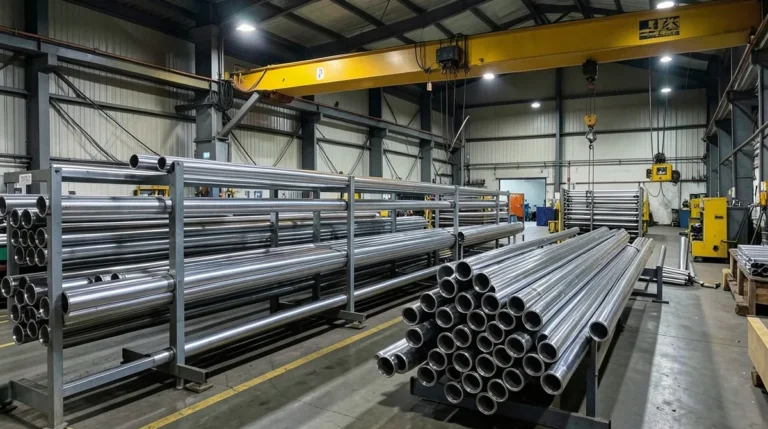
How the tube gets in and out. Loading a one meter tube is a manual operation. Loading an eleven meter tube is a materials handling problem involving a crane or a conveyor and clear space at both ends. A machine that finishes a bore in seconds does not help if loading takes ten minutes.
Neither appears as a number on most specification sheets, and both belong in the conversation before an order. Ask how tubes at your longest length are loaded on the machine as configured, not on the machine as it could be configured.
What Skiving Machine Specifications Leave Out
Four things decide satisfaction and rarely appear in the numbers.
Tooling availability and lead behavior. A machine down for tooling is down whatever its feed rate.
Support reach. Remote access to the machine control shortens diagnosis enormously compared with scheduling a visit.
Certification for your market. CE certification is required for machines deployed into Europe. Confirm it before the purchase order.
Service life. The specification sheet describes a new machine. What it will do in year twenty is a different question, and a machine still running decades after purchase answers it better than any figure on paper.
Frequently Asked Questions About Skiving Machine Specifications
01What does feed rate mean on a skiving machine?
Feed rate is how fast the tool advances through the bore while cutting. Sierra publishes feed rate up to 4 m/min. The achievable rate depends on material, stock removal, and bore diameter, so a published maximum is a ceiling rather than the rate every job will run at.
02Why does retract speed matter?
The return stroke does no cutting, so it is overhead on every cycle. Sierra publishes a retract speed of 9 m/min. On long tube or on operations requiring multiple passes, a slow return adds production hours without producing any finished parts.
03What machine lengths are available?
Sierra builds skiving and roller burnishing machines from 1M to 11M working length. Length cannot be extended after purchase, unlike bore range, which is set by tooling. Choose against a long-term production forecast and confirm floor space for run-out at both ends.
04What bore sizes does SRB tooling cover?
Sierra produces over 200 tooling sizes from 35mm to 508mm, designed and built in house. Ask any supplier for the actual size list against your bore schedule, since a wide quoted range with coarse steps may not include the specific diameters you run.
05How much material can be removed in one pass?
Sierra’s tooling removes from 0.016 inches to 0.60 inches in a single pass. A wide removal range absorbs variation in incoming tube without a separate pre-machining operation. Where tube supply is consistent and close to size, the upper end of that range matters less.
Sierra Machinery & Engineering: Machines and Parts from Sparks, Nevada
Sierra Machinery & Engineering has built skiving and roller burnishing machines in Sparks, Nevada for 47 years as of 2026. A 26-person team runs a 22,000 square foot shop, with every part verified in our CMM Lab before it ships.
What We Build:
- Skiving & Roller Burnishing Machines: Machines from 1M to 11M, feed rate up to 4 m/min, retract speed 9 m/min. CE certified.
- Sierra Machinery Tooling: Over 200 sizes from 35mm to 508mm, designed and produced in house
Need to match a machine to your bore schedule? Request a quote and tell us the tube size, length, and material.
Works Cited
- National Institute of Standards and Technology. “Dimensional Metrology Group.” U.S. Department of Commerce, 26 Mar. 2025, www.nist.gov/pml/sensor-science/dimensional-metrology.