A hydraulic cylinder can look flawless on the outside and still fail early because of a surface hidden inside it. The bore — the inner wall of the cylinder barrel — is where the piston seal does its work, and the condition of that surface largely determines whether the cylinder holds pressure for years or begins weeping oil within months. It’s the part of the cylinder no buyer inspects and no operator ever sees, yet it quietly sets the ceiling on the component’s working life. For anyone specifying, building, or purchasing hydraulic cylinders, the inside of the tube deserves far more attention than it usually gets.
The bore is a sealing surface, not just a tube
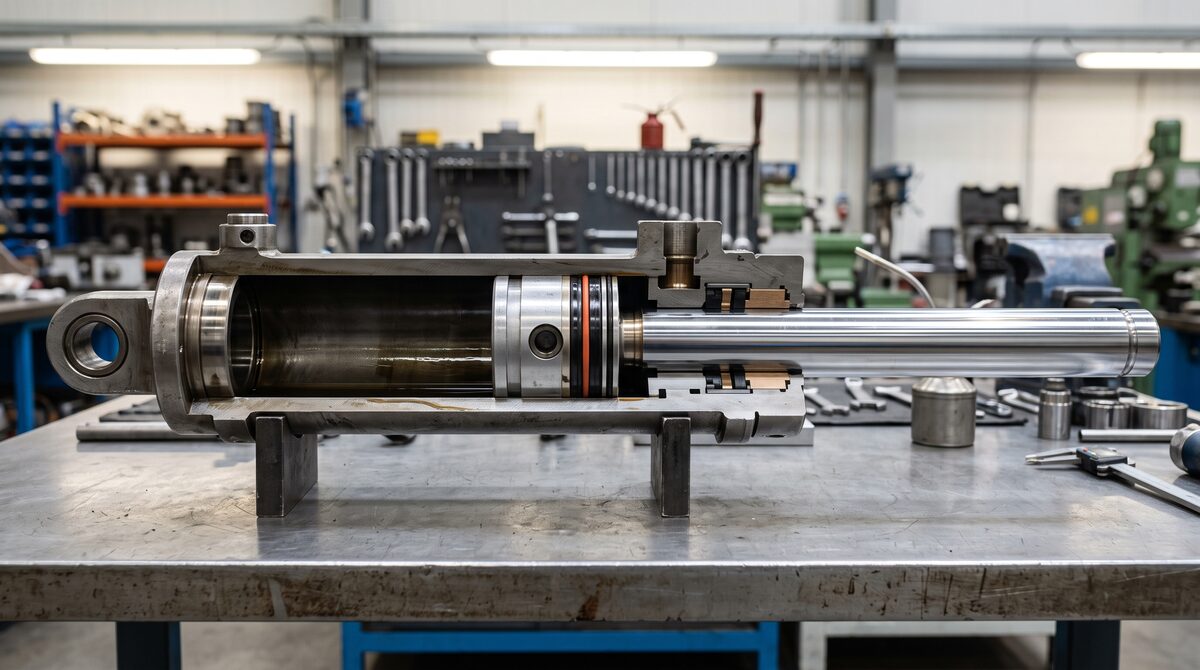
A hydraulic cylinder converts fluid pressure into linear force, with a piston and a set of seals sliding back and forth inside the barrel. As the reference description of the component notes, the cylinder barrel is typically made from honed seamless steel tube to give a wear-resistant interior surface for smooth piston movement and seal efficiency. The piston’s dynamic seals ride directly against that inner wall, and a separate wiper keeps contaminants from being dragged in along the rod. If the bore is too rough, it abrades those seals with every stroke; if it’s the wrong shape, the seal can’t maintain even contact. Either way, the bore surface — not the outside of the cylinder, and not the rod — is doing the actual sealing work. That’s the reason cylinder manufacturers treat the interior finish as a primary quality characteristic rather than a cosmetic one.
Roundness and finish are two different problems
Two separate qualities matter inside the bore, and it’s easy to conflate them. The first is geometry: the bore has to be genuinely round and straight along its full length, or the seal can’t press evenly against it all the way around. The second is surface finish: even a perfectly round bore will leak or wear quickly if the wall is jagged at a microscopic scale. A tube can pass on one measure and fail on the other. This is exactly why skiving and roller burnishing are paired rather than used alone — skiving establishes the round, correctly sized bore, and burnishing delivers the smooth, slightly hardened finish on top of it. The mechanics of that pairing are covered in how a hydraulic cylinder bore gets its mirror finish.
What a poor bore actually costs
When the bore fails to do its job, the damage compounds rather than staying contained. Worn seals begin to leak, which lowers the cylinder’s holding force and lets hydraulic fluid bypass the piston; the escaping fluid can also carry contamination into the system. Uneven contact makes it worse. The reference material notes that side loading can enlarge the bore around the piston and, in severe cases, deform the seals until metal scrapes against metal — turning a microscopic surface issue into a scored barrel and a scrapped cylinder. None of these failures announce themselves from the outside; they begin at the bore and work outward. That’s why manufacturers would rather invest in finishing the bore correctly the first time than absorb the cost of warranty returns, teardown, and rework once a cylinder is already in the field.
Why the finishing method matters
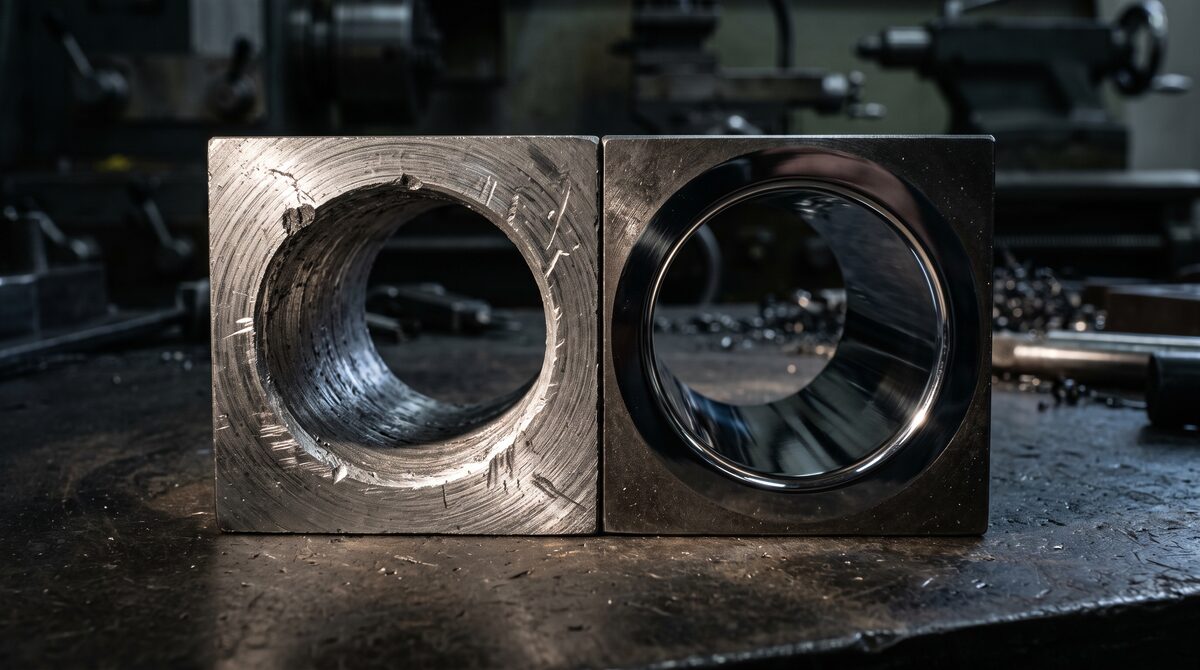
Because so much rides on the bore, how it’s finished is a real engineering decision, not a formality. The goal is a surface that’s round, smooth, and consistent across the entire length of the tube — and, crucially, from the first part off the line to the ten-thousandth. Roller burnishing adds something a purely abrasive process doesn’t: by cold-working the surface, it leaves the bore slightly hardened as well as smooth, improving resistance to the wear that seals and fine contaminants inflict over thousands of duty cycles. A rounder, smoother, harder bore simply lasts longer under the same load. Those same cylinders then go to work in some of the most punishing environments on earth, as detailed in the hydraulic cylinders behind farming, mining, and industrial equipment.
Consistency is its own quality
There’s a difference between finishing one bore beautifully and finishing every bore the same way. A process that drifts over a production run creates cylinders that perform unpredictably in the field — some sealing well, others failing early — which is a harder problem to manage than a single bad part. For a manufacturer shipping in volume, a repeatable bore-finishing process is what keeps warranty rates low and reputation intact. The value isn’t only in the best part the process can produce; it’s in how closely the worst part matches the best.
Built to finish bores right
Sierra Machinery & Engineering builds its skiving and roller burnishing machine specifically to produce that round, mirror-smooth bore in minimum time, and it manufactures its own patented tooling to match — more than 200 sizes spanning 38 mm to 508 mm, for tubes from one meter up to eleven meters. The machines are designed and built in the United States, run on control logic developed in house, and leave the company’s Sparks, Nevada facility CE certified, with a 12-month warranty and real-time remote support. Behind them is a team carrying decades of experience, including a plant manager with 30 years in the field, a quality supervisor with 15, and a machine building supervisor with 14. For cylinder manufacturers, that focus on the bore is the entire point: it’s the surface that decides how long the finished cylinder will last.
Frequently Asked Questions
01What is the bore of a hydraulic cylinder?
The bore is the inner wall of the cylinder barrel, where the piston and its seals slide back and forth. It’s typically made from honed seamless steel tube to provide a wear-resistant interior surface for smooth piston movement and seal efficiency.
02Why does the bore surface finish matter so much?
The piston’s seals ride directly against the bore, so the bore is the surface actually doing the sealing. If it’s too rough it abrades the seals with every stroke; if it’s out-of-round the seal can’t maintain even contact — both of which shorten the cylinder’s life.
03What can happen when a cylinder bore is poor?
Seals wear and begin to leak, lowering holding force and contaminating the fluid. Side loading can even enlarge the bore around the piston and deform the seals until metal scrapes against metal, turning a surface problem into a scored barrel and a scrapped cylinder.
04Does roller burnishing make the bore more durable?
Yes. Because roller burnishing cold-works the surface, it leaves the bore work-hardened as well as smooth, improving resistance to the wear that seals and fine contaminants cause over thousands of cycles.
05Why is consistency important in bore finishing?
Finishing one bore well isn’t enough — every cylinder in a production run needs the same round, smooth surface. A repeatable process keeps field performance predictable and warranty rates low, which is why the finishing method and tooling matter as much as the machine.
Sierra Machinery & Engineering: The World’s Fastest Skiving & Roller Burnishing Machine
Sierra Machinery & Engineering designs and builds its skiving and roller burnishing machine and patented tooling in the United States, purpose-built to finish hydraulic cylinder bores in minimum time.
Explore Our SRB Products:
- Skiving & Roller Burnishing Machines — Round, mirror-smooth cylinder bores, finished fast
- Sierra Machinery Tooling — Patented tooling in over 200 sizes from 35 mm to 508 mm
Ready to see it run? Contact Sierra Machinery to submit an RFQ and hear from the people actually running the shop.
Works Cited
- “Hydraulic Cylinder.” Wikipedia, Wikimedia Foundation, en.wikipedia.org/wiki/Hydraulic_cylinder. Accessed 29 July 2026.