The machines that plow fields, dig mines, and move material through factories share a common muscle: the hydraulic cylinder. Behind every raised bucket, extended boom, tilted bed, and clamped press is a cylinder converting fluid pressure into brute linear force. It’s easy to overlook, because it usually sits hidden inside a housing or tucked along an arm, doing its work out of sight. But without reliable cylinders, the world’s heavy equipment simply stops — and the quality built into each cylinder traces back, in part, to how the inside of its tube was finished.
Hydraulics is how heavy equipment moves
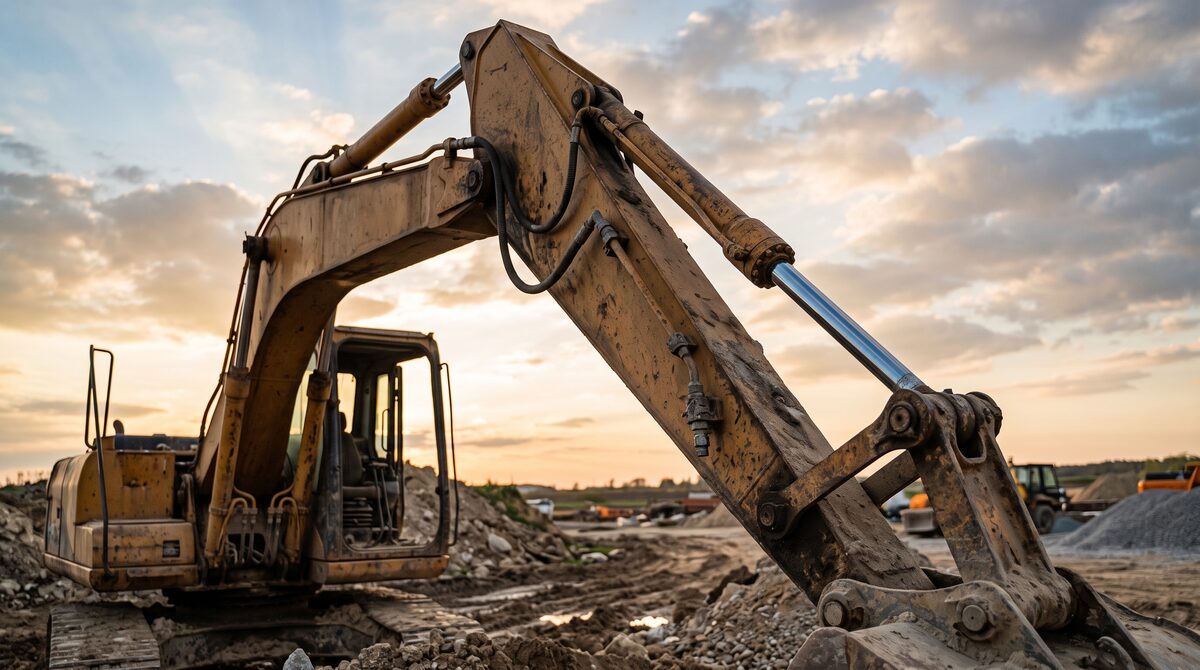
Heavy machinery relies on fluid power to do its heavy lifting. As the reference overview of the category explains, heavy equipment used in construction and mining commonly uses hydraulic drives as a primary source of motion, with implements such as loader buckets raised by hydraulic rams. The reason hydraulic cylinders dominate these applications is their power-to-size ratio: a relatively compact cylinder can generate enormous, controllable force. That’s exactly what a machine needs when it has to lift tons repeatedly, hold a load steady against gravity, and do it all day in the dirt. Electric and mechanical actuators struggle to match that density of force in the same space, which is why the hydraulic cylinder has remained the actuator of choice across earth-moving and material-handling equipment for generations.
Three industries, one dependence
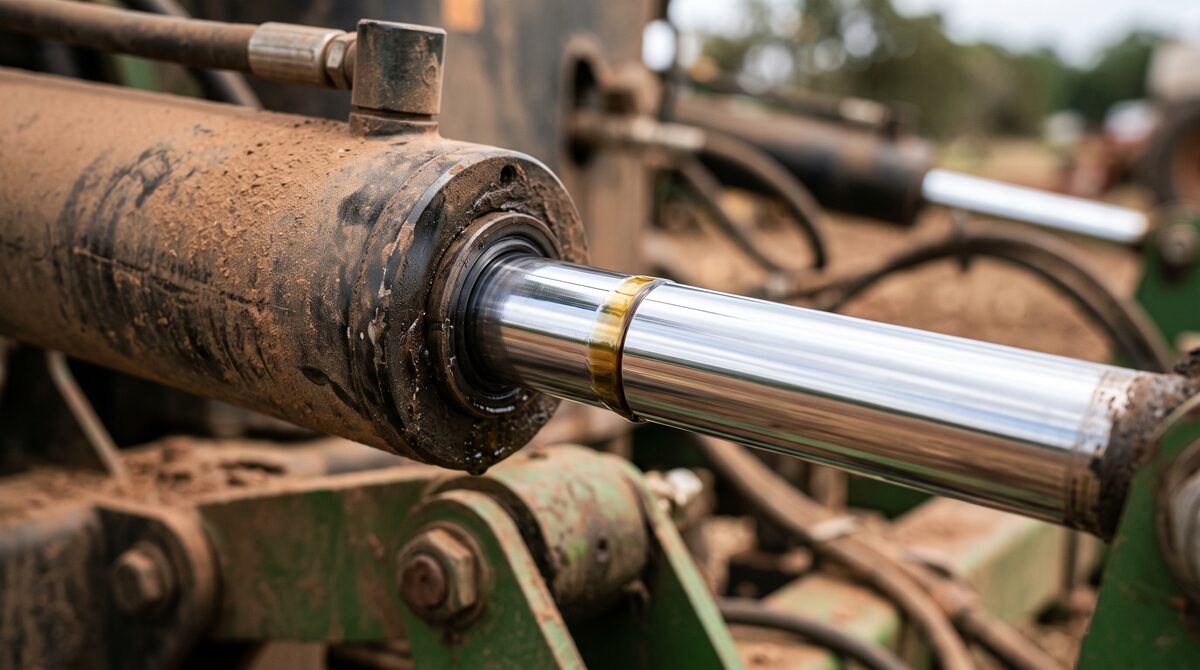
In agriculture, cylinders raise and lower implements, steer articulated machines, and drive the lifting and tilting functions on tractors, loaders, and harvesters — enabling precise control over plowing, planting, and harvesting across long seasons. In mining, the demands intensify: cylinders position heavy equipment, power the booms, arms, and buckets of excavators digging and removing overburden, and lift loaded beds on the haul and dump trucks that move enormous tonnage. In general industrial equipment — material handling, presses, and fabrication machinery — cylinders supply the precise, repeatable motion that production lines are built around, often running continuous shifts. Three very different industries, but one shared dependence: when a cylinder fails, the machine it drives is down. And in these sectors, downtime isn’t a minor inconvenience — it’s measured in lost tons, idle crews, and missed schedules, which is why equipment makers care so much about cylinder reliability.
Why these conditions demand a quality bore
Farming, mining, and industrial duty cycles are unforgiving. Dust and grit, constant vibration, shock loads, wide temperature swings, and near-continuous use all punish any weakness in a cylinder — and the first place trouble tends to appear is the seal-and-bore interface. A cylinder holding position under a multi-ton load can’t tolerate drift from a leaking seal, and a leaking seal frequently traces back to a bore that was never round or smooth enough to begin with. Contaminants that slip past a worn wiper accelerate the damage, scoring the wall the seal rides on. That’s the connection explored in why the inside of a hydraulic cylinder decides how long it lasts: the harsher the application, the more the bore finish matters.
Volume plus reliability
Heavy-equipment manufacturers face a double demand that shapes how they build cylinders: they need them in large numbers, and they need every single one to be reliable. That’s where fast, consistent bore finishing earns its keep. Producing round, mirror-smooth bores quickly and repeatably lets a cylinder maker keep pace with production volumes without trading away the surface quality that field reliability depends on. Speed without consistency floods the field with early failures; consistency without speed can’t feed the line. The process that delivers both — round geometry from skiving, smooth finish from burnishing — is broken down in how a hydraulic cylinder bore gets its mirror finish.
Range matters as much as speed
These industries also vary enormously in the size of the cylinders they use, from compact units on small implements to long, large-diameter cylinders on mining and earth-moving machines. That’s why a bore-finishing platform’s range matters as much as its speed. Sierra’s machines process tubes from one meter up to eleven meters, with more than 200 tooling sizes spanning 38 mm to 508 mm — enough breadth to cover the wide spread of cylinder sizes these equipment makers actually build, on one platform rather than several.
Trusted by the equipment makers
Sierra Machinery & Engineering builds the machine that finishes those bores, and its customer base reflects exactly this world. According to the company, its machines serve many of the largest manufacturers of farming, mining, and industrial equipment produced anywhere, and Sierra Machinery machines run on every continent — across North and South America, India, Japan, China, Korea, Australia, and Europe — with many customers operating multiple machines in production. The equipment is designed and built in the United States, CE certified, backed by a 12-month warranty, and supported in real time from the company’s Sparks, Nevada shop, where it has been manufactured since 1979. For the equipment makers whose cylinders keep the world’s heavy machinery moving, that combination of speed, consistency, range, and support is aimed squarely at their production floor.
Frequently Asked Questions
01Why do farming, mining, and industrial machines rely on hydraulic cylinders?
Heavy equipment commonly uses hydraulic drives as a primary source of motion, and hydraulic cylinders offer a high power-to-size ratio — a relatively compact cylinder can generate large, controllable force, which is exactly what these machines need to lift and hold heavy loads repeatedly.
02What are hydraulic cylinders used for in agriculture?
They raise and lower implements, steer articulated machines, and drive the lifting and tilting functions on tractors, loaders, and harvesters, giving operators precise control over tasks like plowing, planting, and harvesting.
03What are hydraulic cylinders used for in mining?
They position heavy equipment, power the booms, arms, and buckets of excavators that dig and remove material, and lift the loaded beds on haul and dump trucks that move large tonnage.
04Why does bore quality matter more in heavy-equipment cylinders?
These duty cycles are harsh — dust, vibration, shock loads, and near-constant use punish any weakness. A cylinder holding a heavy load can’t tolerate drift from a leaking seal, and leaks often trace back to a bore that wasn’t round or smooth enough to begin with.
05What size cylinders can Sierra’s machine finish?
Sierra’s machines process tubes from one meter up to eleven meters, with more than 200 tooling sizes spanning 38 mm to 508 mm — enough range to cover the wide spread of cylinder sizes used across farming, mining, and industrial equipment on a single platform.
Sierra Machinery & Engineering: The World’s Fastest Skiving & Roller Burnishing Machine
Sierra Machinery & Engineering designs and builds its skiving and roller burnishing machine and patented tooling in the United States, purpose-built to finish hydraulic cylinder bores in minimum time.
Explore Our SRB Products:
- Skiving & Roller Burnishing Machines — High-volume, reliable cylinder bore finishing for equipment manufacturers
- Sierra Machinery Tooling — Patented tooling in over 200 sizes from 35 mm to 508 mm
Ready to see it run? Contact Sierra Machinery to submit an RFQ and hear from the people actually running the shop.
Works Cited
- “Heavy Equipment.” Wikipedia, Wikimedia Foundation, en.wikipedia.org/wiki/Heavy_equipment. Accessed 29 July 2026.