Sparks carries a different industrial history than Reno does. It grew as a railroad town, and the flat industrial ground east of downtown filled with fabrication, machining, and heavy distribution rather than offices. That land use still shapes what the city’s shops can take in through the door.
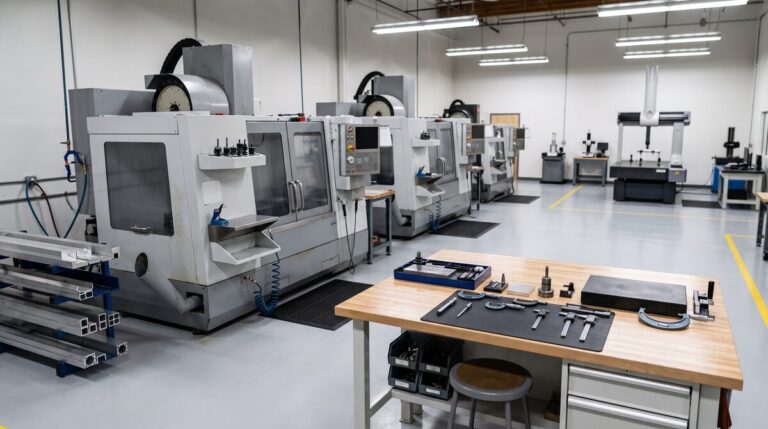
Sierra Machinery & Engineering builds Skiving and Roller Burnishing machines and tooling in Sparks, Nevada, and runs a full precision shop covering CNC machining, tooling and molds, and welding and fabrication. This piece looks at what a machine shop in Sparks NV is typically equipped to do, and how buyers should read the regional numbers.
Read the Regional Data Carefully
Manufacturing employment figures for the Reno metro area are easy to misinterpret, because the metro definition covers several counties with unlike economies.
State figures compiled for the Nevada Governor’s Office of Economic Development in November 2025 put Washoe County manufacturing employment at 6,895 jobs in 2025, up from 5,778 in 2015, a rise of about 19 percent. Neighboring Storey County went from 200 manufacturing jobs in 2015 to 14,008 in 2025. Statewide, the same dataset counted 1,812 payrolled manufacturing business locations in 2024.
Read together, those numbers say something useful. The headline metro growth comes largely from a small number of large plants outside Washoe County. The Reno and Sparks job shop base grew at a steadier pace, and it is still built mostly from small and mid-sized independent shops. If you are sourcing a weldment or a machined component, that base is the one you are actually buying from.
What Sparks Shops Are Built Around
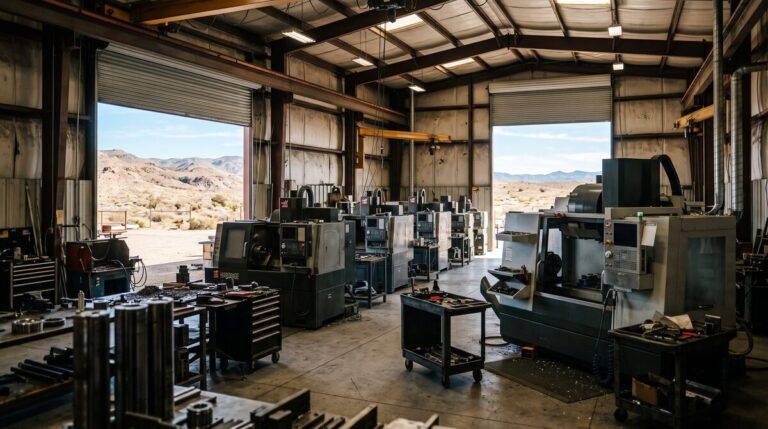
Older industrial buildings on flat ground with rail and highway access tend to produce a particular kind of shop. Tall bays. Overhead cranes. Roll-up doors sized for a flatbed rather than a pickup. Floor space arranged for parts that get moved by machine rather than by hand.
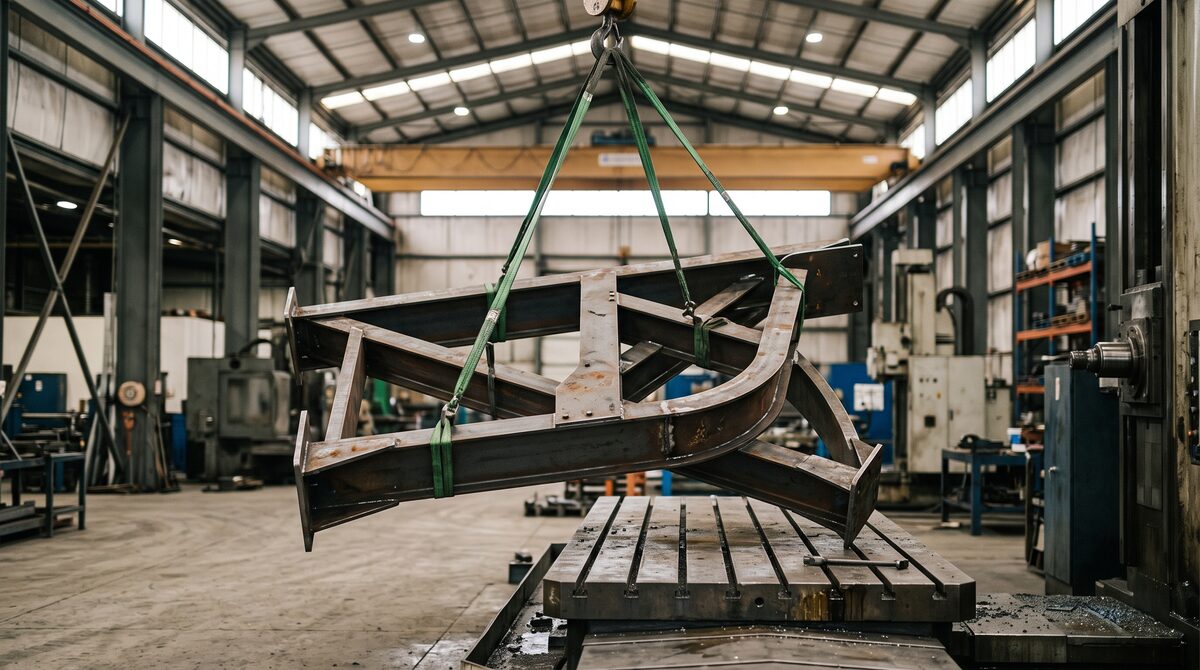
That building stock is why heavy fabrication concentrated here. A shop cannot take in a six-foot weldment if it cannot lift one, and lift capacity is a property of the building as much as the equipment inside it.
For buyers, the practical consequence is straightforward. When a part is large, heavy, or oddly shaped, the Sparks industrial corridor is usually where the capability sits, and the first question is about the building rather than the spindle.
The Jobs Other Shops Decline
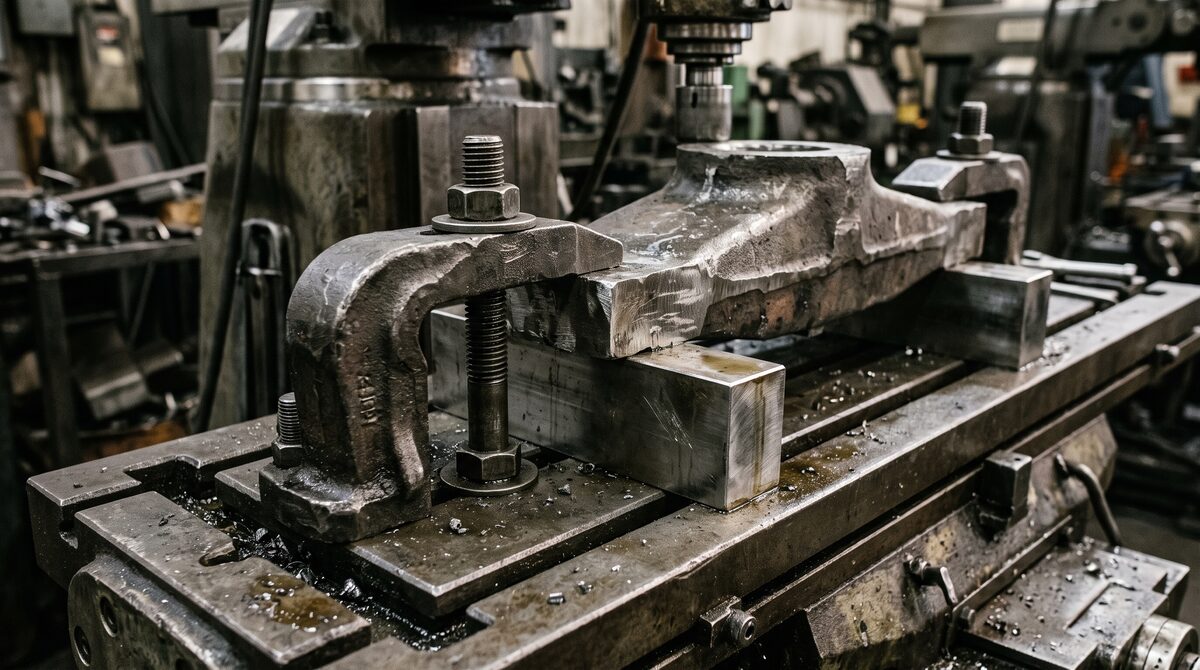
Every region has a category of work that gets quoted reluctantly. Single pieces. Large weldments. Assemblies needing four processes. Legacy parts with no model and a drawing from 1988. Repairs where the original manufacturer no longer exists.
These jobs are declined for rational reasons. They resist scheduling, they consume setup time out of proportion to their value, and they carry uncertainty a volume shop cannot absorb.
Shops that accept them are structured differently. They tend to run mixed routings as normal practice, hold their own fixturing and tooling capability, and employ people who have seen the same problem before. Experience is doing real work here. A supervisor who has machined a similar casting knows where it will move before the first cut.
Sourcing this kind of part means looking for a shop whose ordinary week already contains work like yours. The broader criteria for choosing a machine shop in the Reno area apply, with capacity weighted more heavily than price.
Welding, Fabrication, and What Comes After
Structural and industrial fabrication in this corridor runs mostly on Dual Shield, MIG, and TIG processes, selected by material, thickness, and position. Certified welders matter on structural work, because certification records the procedure and the operator against a qualified specification.
What matters just as much is what happens after the arc goes out. Welding puts heat into an assembly, and heat moves metal. A bore that was located correctly before welding may not be located correctly afterward.
Machining after fabrication is how those features get placed. It also means the assembly needs to travel from the weld bay to a machine large enough to hold it. When both live in the same building, that is a route sheet. When they live in different companies, it is freight, re-fixturing, and a second inspection cycle. The same reasoning drives the comparison between single-source and multi-vendor precision manufacturing.
Questions Worth Asking a Sparks Shop
What is the heaviest part you have machined this year? What is your overhead lift capacity? Are your welders certified, and to which procedures? Can you machine a weldment after stress relief without shipping it out? What measurement equipment verifies the finished part, and what documentation comes back with it?
Answers to those five questions sort a shortlist faster than a price comparison does, because they establish whether the shop can do the work at all.
Frequently Asked Questions About Machine Shops in Sparks NV
01What kind of work do machine shops in Sparks NV specialize in?
The Sparks industrial corridor developed around rail and highway access with tall bays and overhead lift, so shops there tend to handle larger fabrication and machining work. Common jobs include structural weldments, heavy machined components, multi-process assemblies, and one-off parts for industrial equipment.
02How many manufacturing jobs are in Washoe County?
Data compiled for the Nevada Governor’s Office of Economic Development in November 2025 put Washoe County manufacturing employment at 6,895 jobs in 2025, up from 5,778 in 2015. Neighboring Storey County went from 200 jobs to 14,008 over the same period, which is why metro-level figures read differently.
03Can a machine shop weld and machine the same part?
Some can. Welding puts heat into an assembly and heat moves metal, so critical features are often machined after fabrication and stress relief. A shop holding certified welding and CNC machining in one building can run that sequence as a single routed job rather than two shipments.
04Why do some shops decline large or one-off parts?
Single pieces and large weldments resist scheduling and consume setup time out of proportion to their value. Volume shops built around repeat runs price that uncertainty conservatively. Shops that run mixed routings as normal practice absorb it more easily and quote the work realistically.
05What welding processes are used for industrial fabrication?
Dual Shield, MIG, and TIG are common on structural and industrial components, selected by material, thickness, and welding position. On structural work, certified welders matter because certification records both the procedure and the operator against a qualified specification.
Sierra Machinery & Engineering: Machines and Parts from Sparks, Nevada
Sierra Machinery & Engineering has built skiving and roller burnishing machines in Sparks, Nevada for 47 years as of 2026. A 26-person team runs a 22,000 square foot shop, with every part measured and verified in our CMM Lab before it ships.
What We Build:
- Welding & Fabrication: Dual Shield, MIG, and TIG welding for structural and industrial components, with a certified welding team in house
- CNC Machining & Precision Manufacturing: CNC, lathe, mill, Wire EDM, and grinding under one roof for larger parts and multiple-process jobs
Have a weldment other shops have declined? Submit an RFQ and tell us the size, material, and processes involved.
Works Cited
- Nevada Governor’s Office of Economic Development. “Nevada’s Manufacturing Sector.” Nov. 2025, goed.nv.gov/wp-content/uploads/2025/11/Manufacturing.pdf.