For the better part of two decades, sourcing a precision-machined part came down to a single, stubborn calculation. Offshore labor was cheaper, freight was predictable, and the landed cost of a container almost always beat a domestic quote. So the work left. Turning, milling, grinding, and the tight-tolerance jobs that used to fill American shop floors migrated to lower-cost regions, and buyers built their supply chains around that assumption.
In 2026, that calculation is coming apart. Tariffs have reset the cost of imported material and finished parts alike, supply-chain risk has become a line item that finance departments actually price, and a steady stream of production is being pulled back toward the United States. For domestic precision machining, it is the most significant shift in the demand picture in a generation — and it is arriving with real numbers behind it, not just optimism.
The reshoring numbers are real — but they are uneven
The scale of the shift is easy to underestimate until the data lands. The Reshoring Initiative reported that roughly 244,000 U.S. manufacturing jobs were announced in 2024 through a combination of reshoring and foreign direct investment, part of a cumulative total that has surpassed two million jobs since the organization began tracking the trend in 2010. In 2024, reshoring by U.S.-headquartered companies outpaced foreign direct investment by the widest margin the group has recorded, a sign that domestic firms — not just inbound investors — are rethinking where they build.
The important caveat is that this growth is not evenly distributed. The bulk of the announced jobs have clustered in high-tech, capital-intensive sectors: semiconductors, electric-vehicle batteries, electrical equipment, and the large assembly operations that government incentives helped seed. Those are not job-shop categories. A general precision machining business is unlikely to see a semiconductor fab move in next door and start ordering parts.
But the second-order effects are where independent shops actually feel the pull. Every reshored assembly line, every new domestic plant, and every expanded facility needs a supply base underneath it — machined components, fixtures, tooling, brackets, housings, shafts, and the thousands of discrete parts that never make a headline. When final assembly comes home, demand for domestic machining capacity follows it up the supply chain. The announcement gets the press release; the machine shop gets the purchase order six months later.
What tariffs actually changed for machine shops
The reshoring trend did not appear on its own. It was pushed, hard, by a tariff environment that changed the arithmetic on both ends of a machined part — the raw material going in and the finished component coming out.
For a machine shop, the raw-material side is the one that stings first. The same duties that raise the price of an imported finished part also raise the cost of imported steel bar, tube, and rod — the exact stock that shops cut, turn, and grind every day. When that input gets more expensive at the border, the gap between an offshore quote and a domestic quote narrows, and in some cases closes entirely. A part that was clearly cheaper to buy overseas in 2022 can look very different in 2026 once the full landed cost, duty included, is on the table.
The evidence that this is reshaping behavior, rather than just irritating buyers, is in how often tariffs now drive sourcing decisions. The Reshoring Initiative found that tariffs were cited as a motivating factor in dramatically more reshoring cases in 2025 than in 2024 — a jump measured in the hundredths of percent — as companies moved from watching trade policy to acting on it. Tariffs shifted from background noise to a primary reason work came home.
None of this makes tariffs a clean win for manufacturers. They raise costs across the board, and plenty of firms are absorbing higher input prices rather than celebrating a competitive advantage. The point for a precision shop is narrower and more useful: the price signal that once pointed offshore now points, more often than before, toward a domestic supplier.
Reshoring is not automatic
It would be a mistake to read the trend as a guaranteed windfall. Bringing production home is neither cheap nor simple, and the same data that documents the momentum also documents the friction.
U.S. manufacturing costs still run meaningfully higher than offshore competitors — the Reshoring Initiative pegs the gap at roughly 10 to 50 percent depending on the product and process. That spread does not vanish because a tariff exists; it simply becomes easier to justify closing when the total cost of offshoring, including risk, is counted honestly. And the pace is not linear: early 2025 reshoring announcements trended below the 2024 high as companies waited for clearer, more stable policy before committing capital. Uncertainty cuts both ways — it can push work home, and it can also freeze the decision entirely.
The single largest constraint, though, is not cost or policy. It is people. Survey after survey of manufacturers finds that the availability of skilled labor — not tariffs, not tax rates, not the exchange rate — is the biggest factor determining whether offshored work actually returns. A shop can buy a machine in months; it cannot conjure an experienced machinist on the same timeline. That workforce bottleneck is significant enough to be its own story, examined in The Skilled Machinist Shortage Is the Real Bottleneck Holding Back Reshoring, and it is the quiet reason some reshoring announcements will take years to become real parts on real trucks.
The hidden cost is in the handoffs
There is a structural advantage in this environment that rarely makes it into the tariff headlines: the value of doing more of the work in one place.
Every time a part leaves one vendor and travels to another, it accumulates cost that never appears on any single invoice. It picks up freight. It picks up lead time while it sits in a queue. It picks up quoting and administrative overhead as another supplier reviews the print. And it picks up risk — every handoff is a fresh opportunity for a tolerance to drift, a datum to be misread, or a revision to get lost between shops.
A part that needs turning at one supplier, milling at a second, Wire EDM at a third, and grinding at a fourth is a scheduling problem wearing the costume of a machining problem. When supply chains were stable and cheap, that fragmentation was tolerable. In 2026, with buyers actively trying to reduce the number of variables and border crossings in a component’s journey, consolidation has real economic weight. A shop that can take a raw casting or bar and return a finished, inspected part — without shipping it across town or across a border four times — removes cost and risk that a multi-vendor chain simply cannot.
Why component-heavy sectors feel it first
The pressure is not uniform across industries. Sectors that consume large volumes of machined metal components — where the finished product is essentially an assembly of precision parts — feel the tariff-and-reshoring math earliest and most sharply.
Hydraulics is a clear example. A hydraulic cylinder is steel-intensive by nature: tube, rod, and precisely machined components that are directly exposed to the cost of imported steel. When duties raise that material cost, the case for a domestic machining and manufacturing base strengthens quickly, and the sector’s response is an early indicator of where the broader trend is heading. That specific dynamic — how tariffs on imported cylinder components are changing where this work gets done — is explored in Tariffs on Imported Cylinder Components Are Pushing Hydraulic Manufacturing Back Onshore. The takeaway for the wider precision-machining market is that component-heavy, metal-intensive industries are the leading edge of reshored demand, and the shops positioned to serve them are the ones that benefit first.
What buyers are weighing in 2026
For the people actually placing orders, the decision has become less about chasing the lowest unit price and more about managing exposure. That change in mindset is visible in the sentiment data.
In the National Association of Manufacturers’ Q4 2025 Manufacturers’ Outlook Survey, trade uncertainty ranked as the single top business challenge, and more than 80 percent of manufacturers reported paying tariffs on imported inputs since the start of 2025. When trade policy is the number-one worry on the floor, and duties are already hitting the material coming in the door, buyers start valuing things that a spreadsheet full of offshore unit costs never captured: predictability, proximity, and the ability to get a part without a six-week ocean crossing or a surprise duty on a container.
That is the argument for a stable domestic partner in plain terms. It is not that overseas suppliers cannot make the part. It is that the total cost of relying on them — the freight, the lead time, the tariff exposure, the carrying cost of inventory floating on a ship, the scramble when policy changes overnight — has climbed to a point where a capable shop down the road looks less like a premium and more like insurance. In a market where the variable everyone is trying to control is the supply chain itself, that shift in priorities is doing as much to reshape sourcing as any single tariff line.
Where Sierra Machinery fits
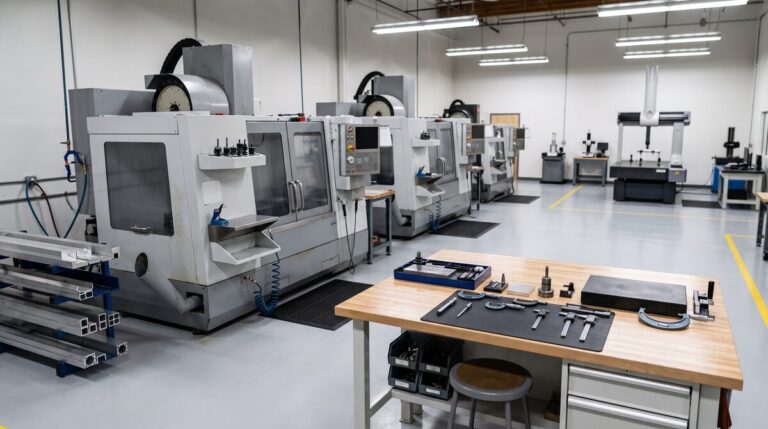
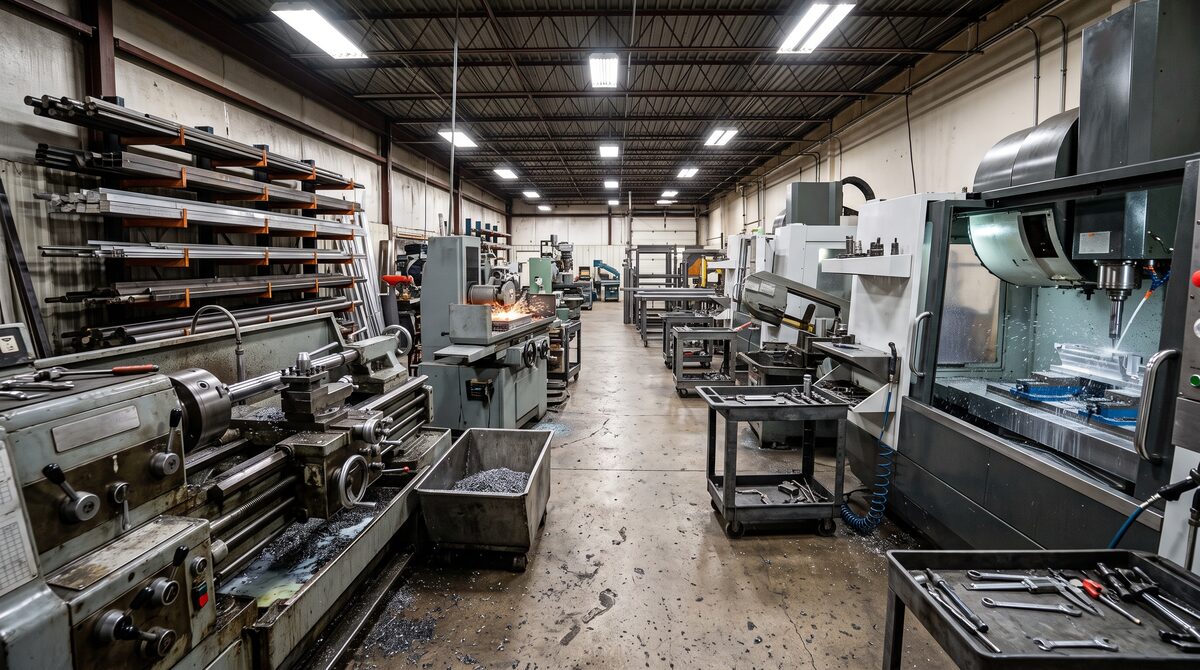
This is the environment in which a shop’s fundamentals become its selling point. Sierra Machinery & Engineering has run a full-service precision operation in Sparks, Nevada since 1979 — 47 years at one address — handling larger parts and multi-process work in house: CNC machining, lathe, mill, Wire EDM, and grinding, with a dedicated CMM lab verifying parts to tolerance before they ship. It is the same shop that built the world’s fastest skiving and roller burnishing machine, work rooted in the hydraulic industry that is now feeling the tariff math most directly.
For manufacturers reconsidering where their machined components come from in 2026, that combination — domestic, multi-process, and under one roof, backed by decades of retained experience — is precisely the kind of stable supplier the current numbers keep pointing toward. The math changed. The capability was already here.
Sierra Machinery & Engineering: Precision Manufacturing Under One Roof
Sierra Machinery & Engineering delivers CNC machining, lathe, mill, Wire EDM, and grinding for hydraulic and general industrial customers — every process in one Sparks, Nevada facility, backed by a dedicated CMM lab and nearly five decades of experience.
Our Capabilities Include:
- CNC Machining & Precision Manufacturing — Multi-process, tight-tolerance work across a full range of part sizes
- Wire EDM, Grinding & Multi-Process Parts — Complete in-house machining for complex, multiple-operation jobs
Have a complex part? Contact Sierra Machinery or submit an RFQ to reach the people actually running the shop.
About the Author
Stanley Wright is a seasoned executive with three decades of experience in the management of manufacturing companies. In 2018 he had the privilege to take over the management of Sierra Machinery, Inc. from Krestine Corbin, the founding owner, who had developed the company’s global reach before her retirement. Since that time, he has worked to further develop the customer focus and manufacturing excellence needed to compete and succeed in today’s world and beyond. He believes all business relations should begin with honesty and the highest ethics. Following that, clear communication is the hallmark of a successful company serving its customers well.
Works Cited
- “Reshoring Initiative 2024 Annual Report Including 1Q2025 Insights.” Reshoring Initiative, 9 June 2025, reshorenow.org/june-9-2025/. Accessed 6 July 2026.
- “Manufacturers Report a Mixed Outlook in Latest Survey.” National Association of Manufacturers, 17 Dec. 2025, nam.org/manufacturers-report-a-mixed-outlook-in-latest-survey-35409/. Accessed 6 July 2026.