A hydraulic cylinder is, at its core, a precisely machined assembly of metal. A steel tube, a hardened and ground rod, end caps, glands, and the tight-tolerance bore that lets the whole thing hold pressure — every one of those parts begins as raw stock and ends as a finished machined component. That simple fact is why, of all the corners of American manufacturing reacting to the 2026 tariff environment, hydraulics is feeling it early and feeling it hard. When the cost of imported metal jumps, the economics of building and buying cylinders shift with it, and a growing share of that work is being pulled back onto U.S. soil.
This is not a story about a single policy or a single quarter. It is a structural shift in how a metal-intensive industry sources its most basic inputs — and hydraulics, because it is so thoroughly a business of machined steel, is one of the clearest places to watch it unfold.
The tariff that reset the material math
The trigger is straightforward. In mid-2025 the federal government raised Section 232 tariffs on imported steel and aluminum — and on the derivative products made from them — from 25 percent to 50 percent. The Federal Register proclamation set the increase to take effect in early June 2025, with only a narrow carve-out for the United Kingdom. In practical terms, the duty on the metals that matter most to a cylinder maker doubled overnight.
For a hydraulic manufacturer, that is not an abstract trade figure. Steel tube and rod form the literal skeleton of a cylinder, and aluminum and copper run through the valves, manifolds, and fittings that surround it. Doubling the tariff on those metals raises the landed cost of both imported raw stock and imported subcomponents, and it compresses the price gap that once made overseas sourcing an easy default. A component that was comfortably cheaper to import in 2023 can look very different in 2026 once the full duty is counted.
How the industry is actually reacting
The fluid power sector — the industry that designs and builds hydraulic and pneumatic systems — spent 2025 living inside exactly this problem. Industry shipment and order data showed the market down on the year as trade-policy uncertainty, high interest rates, and soft demand combined to slow purchasing across construction, agriculture, and industrial equipment. Tariffs were not a side issue; they were near the center of nearly every planning conversation.
According to reporting in Power & Motion, the tariff turbulence forced fluid power companies to rebuild their cost structures all the way down to raw materials rather than just finished goods — a reevaluation that reached the aluminum, stainless steel, and copper that cylinders and valves are built from. The responses were revealing. Some manufacturers shifted production between countries to sidestep specific duties. Others, including domestic producers who still import subcomponents, absorbed the uncertainty and scrambled to re-source. And beneath the disruption, industry leaders repeatedly pointed to a genuine reshoring opportunity.
That opportunity is the same logic laid out in Tariffs and Reshoring Are Rewriting the Math for U.S. Precision Machining in 2026. As the cost advantage of imported metal narrows, keeping more of a cylinder’s fabrication and machining inside the United States stops being a patriotic preference and starts being an economic one. The tariff did not create domestic capability out of thin air, but it changed the arithmetic that decides where the work goes.
Why hydraulics feels it more than most
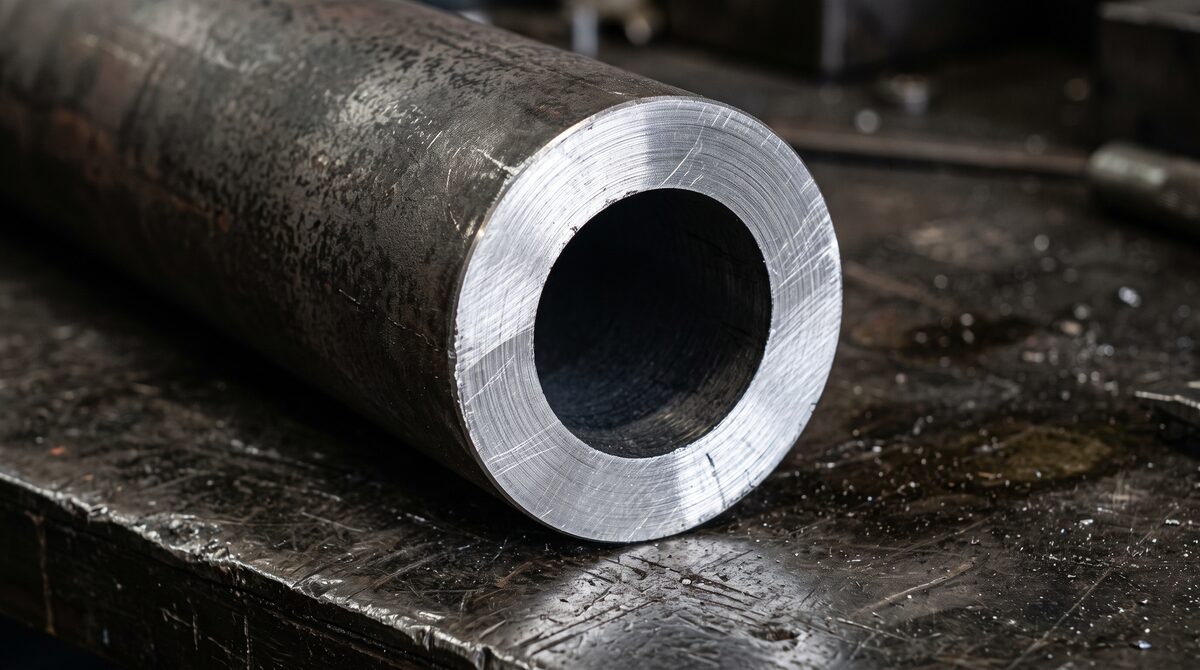
Not every product is equally exposed to a metals tariff, and the difference comes down to how much of a product’s value is metal. A finished good that is only a small fraction metal by cost barely notices when steel duties climb. A hydraulic cylinder sits at the opposite end of that spectrum: its value is concentrated in material and precision machining, not in electronics or software. When the tariff on steel doubles, cylinder economics move immediately.
That intensity makes hydraulics an early warning system for how metals tariffs ripple through metal-heavy manufacturing more broadly. It also raises the stakes on getting the work right. Cylinders demand serious machining — turning long rods, boring and finishing tubes, and holding surface tolerances tight enough that the part seals under pressure instead of scoring, leaking, or failing in the field. This is not commodity fabrication; it is precision work where a small error becomes a warranty claim or a safety issue.
The case for keeping it under one roof
In a tariff-shaped market, the structure of a supply chain matters as much as its geography. A cylinder that is fabricated in one country, machined in another, and finished in a third accumulates duty, freight, and lead time at every border it crosses. Each handoff is also a fresh chance for a tolerance to drift or a revision to get lost between suppliers. Consolidating that work — turning, milling, grinding, and the specialized operations a cylinder needs — into a single domestic facility strips out both the tariff exposure and the coordination risk.
The catch is that doing this work at home requires the skilled hands to execute it. That constraint is the subject of The Skilled Machinist Shortage Is the Real Bottleneck Holding Back Reshoring, and it is the quiet limiting factor on hydraulic reshoring. Bringing cylinder work back onshore only succeeds where the machining expertise exists to hold the tolerances a pressurized part demands. The tariffs create the incentive; experienced machinists and capable shops determine whether the incentive turns into delivered parts.
For buyers, the implication is a shift in what a good hydraulic supplier looks like in 2026. Lowest unit price still matters, but so does insulation from tariff swings, shorter and more predictable supply lines, and the ability to keep a part’s fabrication and finishing under one roof rather than exposed across several borders. A capable domestic shop increasingly reads less like a premium and more like a hedge.
Where Sierra Machinery fits
This is the environment in which a shop’s roots become an advantage. Sierra Machinery & Engineering built its reputation on the world’s fastest skiving and roller burnishing machine — equipment aimed squarely at hydraulic cylinder manufacturing — and has served hydraulic customers from its Sparks, Nevada shop since 1979. The same facility handles larger parts and multi-process work in house: CNC machining, lathe, mill, Wire EDM, and grinding, with a dedicated CMM lab verifying parts to tolerance before they ship.
For hydraulic manufacturers rethinking where their cylinder components come from as metals tariffs reshape the math, that combination — deep hydraulic experience, multiple processes under one domestic roof, and verification built into the workflow — is exactly the kind of capability the current trade environment keeps pointing toward.
Sierra Machinery & Engineering: Precision Manufacturing Under One Roof
Sierra Machinery & Engineering delivers CNC machining, lathe, mill, Wire EDM, and grinding for hydraulic and general industrial customers — every process in one Sparks, Nevada facility, backed by a dedicated CMM lab and decades of hydraulic-industry experience.
Our Capabilities Include:
- CNC Machining & Precision Manufacturing — Multi-process, tight-tolerance work across a full range of part sizes
- Wire EDM, Grinding & Multi-Process Parts — Complete in-house machining for complex, multiple-operation jobs
Have a complex part? Contact Sierra Machinery or submit an RFQ to reach the people actually running the shop.
About the Author
Stanley Wright is a seasoned executive with three decades of experience in the management of manufacturing companies. In 2018 he had the privilege to take over the management of Sierra Machinery, Inc. from Krestine Corbin, the founding owner, who had developed the company’s global reach before her retirement. Since that time, he has worked to further develop the customer focus and manufacturing excellence needed to compete and succeed in today’s world and beyond. He believes all business relations should begin with honesty and the highest ethics. Following that, clear communication is the hallmark of a successful company serving its customers well.
Works Cited
- “Adjusting Imports of Aluminum and Steel Into the United States.” Federal Register, National Archives and Records Administration, 9 June 2025, federalregister.gov/documents/2025/06/09/2025-10524/adjusting-imports-of-aluminum-and-steel-into-the-united-states. Accessed 6 July 2026.
- Jensen, Sara. “Fluid Power Industry Continues to Navigate Market Challenges While Embracing New Opportunities.” Power & Motion, 20 Nov. 2025, powermotiontech.com/pneumatics/article/55331507/fluid-power-industry-continues-to-navigate-market-challenges-while-embracing-new-opportunities. Accessed 6 July 2026.